Linking sponsors
Entity linking in a fundraising platform
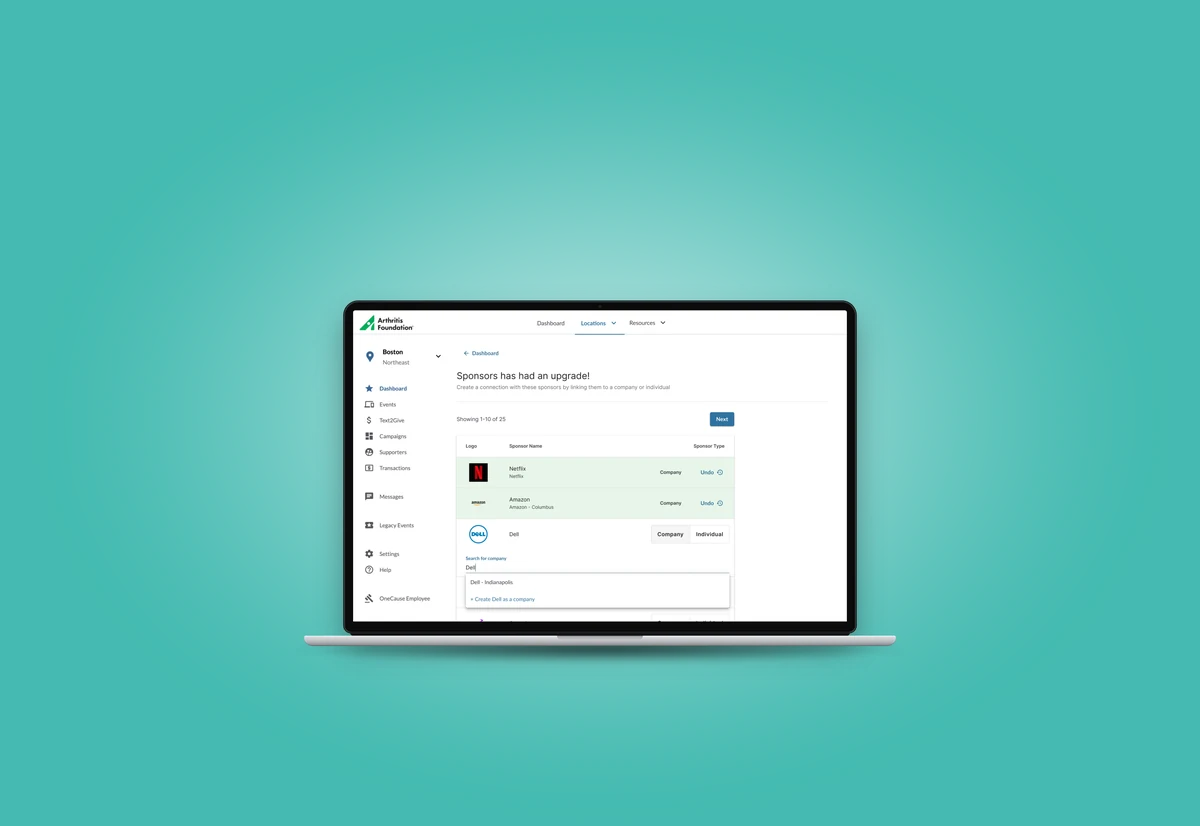
I designed the entity-linking workflow inside OneCause's sponsorship feature — connecting sponsor records to existing people and companies across the platform, reducing relationship ambiguity and supporting cleaner data across events.
A platform relationship problem
OneCause helps nonprofits manage fundraising events, sponsors, attendees, payments, and communications. Before sponsorships became a dedicated feature, the surrounding relationship model did not consistently distinguish between individual and company sponsors. My team introduced sponsorships as a new capability, which created a new relationship challenge: sponsor activity needed to map to the right existing person or company record without disrupting event setup.
This flow was designed to bridge that gap — giving teams a structured way to resolve those connections across the platform.
Sponsor records could exist in isolation
- As sponsorships became a dedicated feature, sponsor activity needed to connect back to the people and company records already used elsewhere in the platform.
- Without that connection, teams had a harder time understanding sponsor history, reusing existing relationships, and avoiding duplicate or ambiguous records.
- The challenge was to help users resolve those relationships without slowing down normal event setup.
Connecting sponsors without disrupting the workflow
How might we help nonprofits connect sponsors to existing people and company records while keeping the workflow clear, flexible, and non-disruptive?
The solution needed to support several states
- Sponsors already connected to a record
- Sponsors that still needed review
- Sponsors that could match an existing individual or company
- Sponsors that might require a new record
- Sponsors that users could skip or resolve later
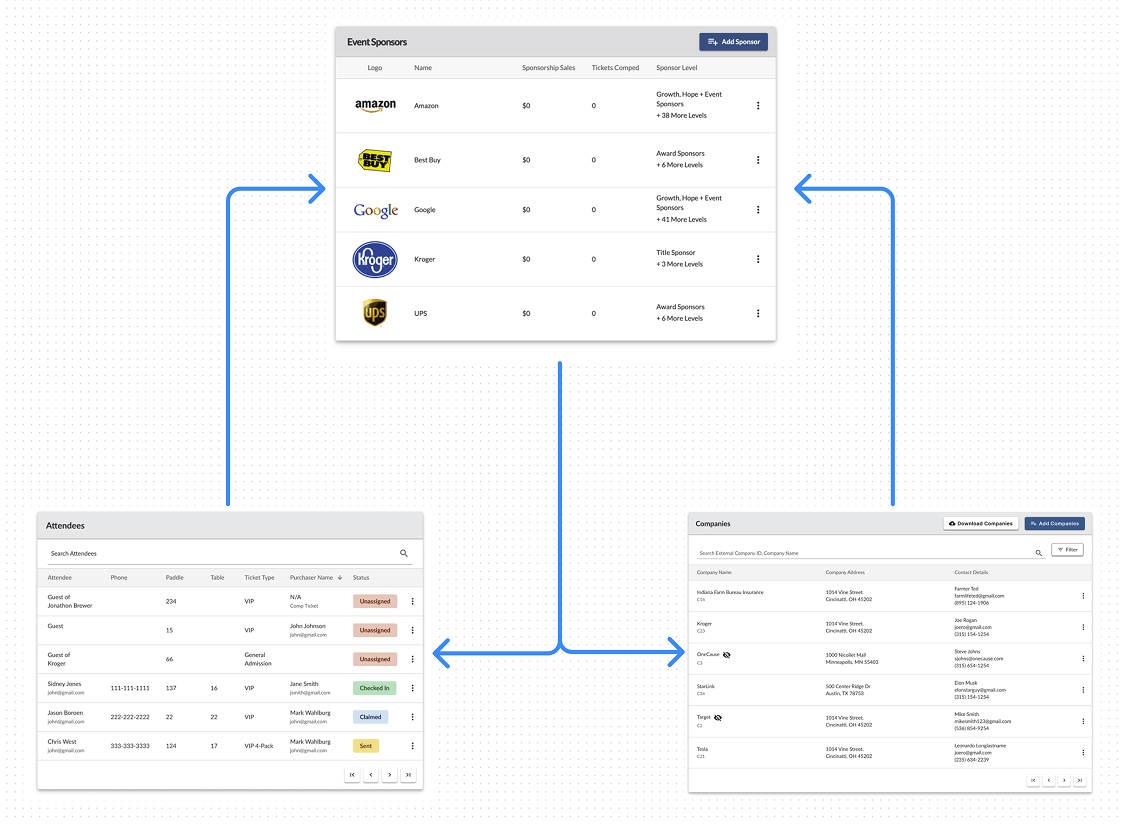
An entity-relationship problem at its core
Underneath the workflow problem was an entity-relationship issue: sponsor records needed to map cleanly to existing people and company records so that activity could become part of a broader relationship history rather than staying isolated inside a single event.
That meant the experience needed to answer three questions quickly:
What sponsor records need attention?
Is this sponsor an existing person or company?
What is the right resolution action?
A worksheet-style review workflow
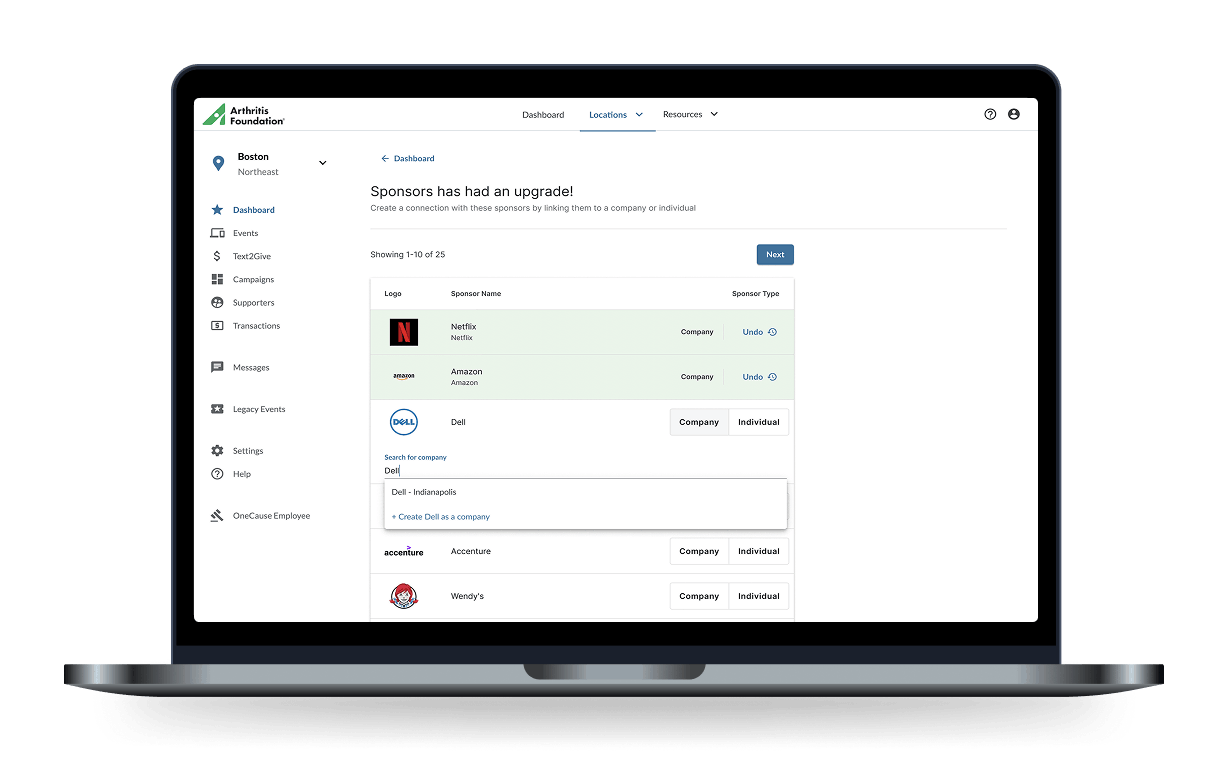
I designed a worksheet-style workflow that let users review sponsors in one place, understand their status, and connect each sponsor to the appropriate existing individual or company record.
Batch review
Review multiple sponsors in one place, without opening one-off forms.
Clear status states
Clear review states made it easy to see which sponsors were connected, skipped, or still needed attention.
Search and matching
Search existing records and connect each sponsor to the right company or individual.
Flexible resolution
Link a sponsor immediately, skip it temporarily, or resolve it later.
Confirmation feedback
Confirm each successful connection so users know the sponsor relationship was updated.
Four decisions that shaped the workflow
Use a compact list flow instead of a multi-step wizard
A scannable list let users review and resolve all sponsors in one pass — instead of committing to a separate sequence of steps per record that would make bulk resolution slow and progress invisible.
Allow editing and deletion at any point
Users needed to correct mistakes or remove sponsors after initial entry. Making edit and delete available throughout the workflow — not just at the end — reduced the cost of errors and kept the list accurate.
Support partial resolution
Not every sponsor could be resolved immediately. The flow allowed users to skip, revisit, or complete connections without blocking event setup.
Prevent duplicate entity creation
By surfacing existing people and company records during review, the workflow encouraged linking before creating unnecessary new records.
A clearer way to resolve sponsor relationships
The final workflow gave nonprofits a clearer way to resolve sponsor relationships across the platform. Instead of leaving sponsorship activity isolated inside an event, users could connect sponsors to existing people and company records, preserve relationship history, and reduce duplicate or ambiguous records.
The wider sponsorship, advertising and sales work supported $1M+ in transactions within six months.
Interested in working together?